
Timber floors bring warmth and natural beauty to a home, but daily use can slowly reduce their shine. Foot traffic, furniture movement, dirt, and spills can leave wooden floors looking tired even when the timber itself is still in good condition.
Buffing timber floors is one of the easiest ways to refresh their appearance without completely sanding and refinishing them. This process removes light surface marks, smooths the existing finish, and brings back a cleaner, polished look.
At The SosoActive, we share practical home improvement ideas that help homeowners maintain and improve their living spaces. Taking care of timber flooring is a simple upgrade that can make an entire room feel fresher and more inviting.
What Is Buffing Timber Floors?
Buffing timber floors is a maintenance process where a special machine uses a soft pad to polish the surface of wooden flooring lightly. Unlike sanding, buffing does not remove a significant amount of timber.
The main purpose is to:
- Remove light scratches
- Improve floor shine
- Smooth small imperfections
- Prepare floors for a fresh coat of finish
Many homeowners confuse buffing with sanding. Sanding is a deeper restoration process that removes the old finish and a thin layer of wood, while buffing focuses mainly on improving the existing surface.
For example, a timber floor that looks dull after five years of family use may only need buffing, while a floor with deep scratches and damaged coating may require sanding and refinishing.
When Should You Consider Buffing Timber Floors?
Knowing the right time to buff your floors can prevent unnecessary repairs.
Common signs that your timber flooring needs attention include:
- The surface looks cloudy or dull
- Light scratches appear in high-traffic areas
- The finish feels uneven
- The floor has lost its original shine
A typical home may need timber floor buffing every few years, depending on the amount of traffic. A busy household with pets and children may need maintenance more often than a home with fewer occupants.
For example, a hallway near the front entrance usually wears faster than a bedroom because it receives more dirt and foot traffic.
Buffing vs Sanding: What Is the Difference?
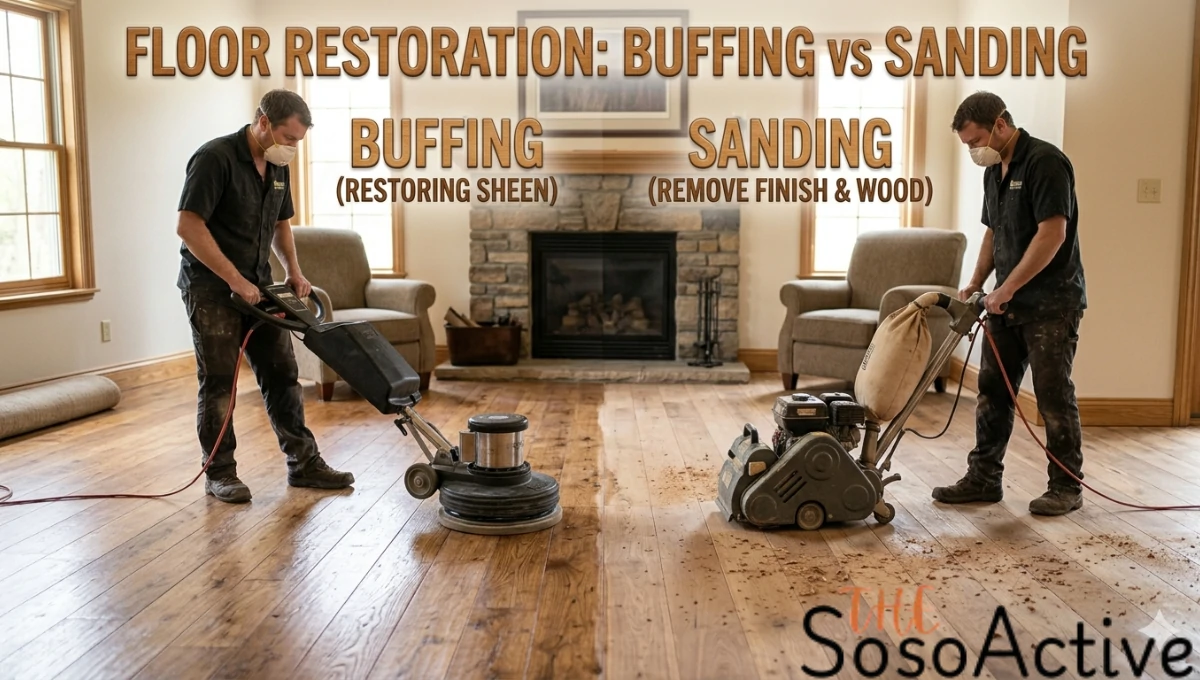
Many homeowners are unsure whether they need buffing or sanding.
Buffing
Buffing is suitable when:
- The timber is still in good condition
- Scratches are only on the surface
- The protective coating needs refreshing
It is quicker, creates less mess, and costs less than a complete restoration.
Sanding
Sanding is needed when:
- Deep scratches reach the timber
- The finish is peeling
- The wood has serious damage
- The floor needs a completely new appearance
A professional may recommend sanding before applying a new stain or protective finish.
Understanding this difference helps homeowners avoid paying for a larger project when a simple maintenance treatment is enough.
How to Prepare Before Buffing Timber Floors
Proper preparation makes the process more effective.
Before starting, homeowners should:
Remove Furniture
Move chairs, tables, rugs, and decorations from the room. Large furniture pieces can prevent even buffing.
Clean the Floor
Dust and dirt should be removed before polishing. Small particles can create extra marks during the process.
Check the Existing Finish
Inspect the floor for damaged areas. If there are deep cracks or exposed wood, buffing alone may not solve the problem.
For example, a dining room floor with minor dullness may only require cleaning and buffing, but a kitchen floor damaged by water leaks may need more extensive repair.
The Process of Buffing Timber Floors
The exact method can vary depending on the timber type and finish, but the general process includes:
1. Deep Cleaning
The floor is cleaned to remove dust, dirt, and surface buildup.
2. Light Buffing
A floor buffing machine is used with a suitable pad to polish the surface gently.
3. Applying Protective Finish
Some floors may receive an additional coat of finish after buffing to improve protection.
4. Drying Time
The floor needs enough time before furniture is returned.
Drying time depends on the product used. Some finishes may require several hours, while others may need longer before heavy use.
Choosing the Right Floor Buffing Machine
A floor buffing machine is designed to polish large areas more efficiently than manual methods.
There are different types available:
- Residential buffing machines
- Commercial polishing machines
- Professional-grade equipment
For small homes, renting a machine may be more practical than buying one.
However, using the wrong machine or applying too much pressure can damage the finish. If you are unsure about your timber type, consulting a flooring professional can prevent costly mistakes.
How Much Does Buffing Timber Floors Cost?
The cost of buffing depends on several factors:
- Floor size
- Timber condition
- Location
- Type of finish required
- Labour costs
A small room may cost less, while an entire house will require more time and materials.
For example, buffing a 20-square-metre living room is usually a smaller project than restoring timber flooring throughout a 150-square-metre home.
Prices vary by region, so homeowners should compare quotes from local flooring specialists before starting.
How to Maintain Timber Floors After Buffing
After investing time and money into timber floor care, proper maintenance helps extend the results.
Useful habits include:
- Use mats near entrances
- Clean spills quickly
- Avoid dragging heavy furniture
- Use protective pads under chairs and tables
- Sweep regularly
Small actions can prevent major damage.
For example, placing felt pads under dining chairs can reduce scratches caused by daily movement.
How Buffed Timber Floors Improve Interior Design
Flooring has a major impact on the overall appearance of a home. A clean, polished timber floor can make furniture, lighting, and decorations look more attractive.
This connects with the ideas discussed in our previous article about how to create seamless interiors for a modern home, where flooring, materials, and furniture choices work together to create a balanced space.
A refreshed timber floor can help connect different areas of the home by creating a consistent and natural foundation.
Common Mistakes When Buffing Timber Floors
Using the Wrong Products
Not every cleaning product is suitable for timber. Some harsh chemicals can damage the protective finish.
Skipping Preparation
Buffing over dirt and dust can create unwanted marks instead of improving the floor.
Expecting Buffing to Fix Deep Damage
Buffing improves surface issues, but it cannot repair major structural damage or deep scratches.
Understanding what buffing can and cannot do helps homeowners choose the right solution.
DIY Buffing or Hiring a Professional?
Some homeowners choose DIY buffing for smaller areas, while others prefer professional services.
DIY may work if:
- The floor condition is good
- The area is small
- You have experience using equipment
Professional help may be better if:
- The floor is expensive timber
- The damage is unclear
- You want a long-lasting finish
A professional can identify whether the floor needs buffing, polishing, or complete restoration.
FAQs About Buffing Timber Floors
1. What is buffing timber floors used for?
Buffing timber floors is used to restore shine, remove light surface scratches, and improve the appearance of wooden flooring without completely sanding the timber.
2. How often should timber floors be buffed?
The frequency depends on traffic and floor condition. Many homes may benefit from buffing every few years, while high-traffic areas may need more frequent maintenance.
3. Is buffing better than sanding timber floors?
Buffing is better for floors with minor wear and dullness. Sanding is needed for deeper damage, scratches, or floors requiring a complete finish replacement.
4. Can I buff timber floors myself?
Yes, some homeowners can complete small projects with rented equipment. However, incorrect machine use can damage the floor finish.
5. How long does timber floor buffing take?
The timeframe depends on the floor size and condition. A single room may take a few hours, while larger homes can require more time.
6. Does buffing remove scratches from timber floors?
Buffing can reduce light surface scratches but cannot remove deep scratches that have damaged the wood underneath.
7. What machine is used for buffing timber floors?
A floor buffing machine with a suitable polishing pad is commonly used. The correct pad depends on the timber finish and condition.
8. How do I protect timber floors after buffing?
Use rugs in high-traffic areas, clean spills quickly, avoid dragging furniture, and use protective pads under furniture legs.
9. Can all types of timber floors be buffed?
Many timber floors can be buffed, but the best approach depends on the wood type and existing finish. Checking the floor condition first is recommended.
10. How much does timber floor buffing cost?
The cost varies depending on floor size, condition, location, and the service provider. Getting multiple quotes helps homeowners understand the expected price.
Final Thoughts
Buffing timber floors is a practical way to restore the beauty of wooden flooring without choosing a full renovation. It can improve shine, reduce minor marks, and extend the life of your timber floors.
The best results come from understanding your floor’s condition, using the right maintenance approach, and protecting the surface after treatment.
A well-maintained timber floor does more than look beautiful. It creates a warmer, more comfortable home that feels carefully designed.
For more practical home improvement advice, explore The SosoActive and discover simple ways to improve your living spaces.