

When homeowners want flooring or wall finishes that combine beauty with long-lasting quality, Italian tiles are often at the top of the list. Known for elegant designs, excellent craftsmanship, and durable materials, these tiles have been used in luxury homes, hotels, and commercial buildings for decades.
But choosing the right Italian tiles isn’t just about appearance. Different materials, finishes, and installation locations all affect how the tile performs over time. Understanding these differences helps you make a smarter investment.
At The SosoActive, we believe great design starts with informed decisions. Whether you’re renovating one room or building a new home, selecting the right tile can improve both the look and functionality of your space.
Introduction
Have you ever walked into a home where the flooring immediately caught your eye? Smooth surfaces, elegant patterns, and a premium finish often have one thing in common: high-quality Italian tile.
Italian manufacturers have built a global reputation for producing tiles that combine advanced technology with timeless design. From modern porcelain flooring to luxurious marble finishes, these products are used in homes around the world.
Imagine a kitchen with polished marble-look flooring, a bright bathroom finished with elegant wall tiles, or a living room where every detail feels sophisticated. The right Italian tile can completely transform a home’s atmosphere.
Before choosing a tile based only on color or price, learn how different materials, finishes, and designs perform in real homes. The right decision today can save money and maintenance in the future.
Why Italian Tiles Are So Popular
Italy has long been recognized as one of the world’s leading producers of premium ceramic and porcelain tiles.
Many homeowners choose Italian tiles because they offer:
- High manufacturing quality
- Modern and classic designs
- Excellent durability
- A wide variety of finishes
- Timeless appearance
Italian tile manufacturers also invest heavily in new production technologies, allowing them to create realistic stone, wood, and concrete finishes while maintaining excellent durability.
For example, many luxury hotels install porcelain Italian tiles that resemble natural marble. Guests enjoy the elegant appearance while the hotel benefits from easier maintenance compared to real stone.
What Makes Italian Tiles Different?
Many countries manufacture ceramic and porcelain tiles, so what makes Italian products stand out?
Several factors contribute to their reputation.
Advanced Manufacturing
Italian factories often use precise production methods that create consistent sizes and smooth finishes.
This consistency makes installation easier because tiles fit together more accurately.
Premium Design
Italian designers frequently introduce new colors, textures, and patterns inspired by architecture, fashion, and natural materials.
Instead of following trends, many Italian manufacturers help create them.
Long-Term Durability
Good-quality tiles resist:
- Daily foot traffic
- Moisture
- Surface wear
- Staining
The exact durability depends on the specific product, installation quality, and how the tiles are maintained.
Types of Italian Tiles
Choosing the right material is just as important as choosing the right design.
Porcelain Italian Tiles
Porcelain is one of the most popular options for modern homes.
Advantages include:
- High durability
- Low water absorption
- Easy maintenance
- Suitable for indoor and outdoor use
Porcelain works especially well in kitchens, hallways, and bathrooms where moisture resistance is important.
Ceramic Italian Tile
Ceramic Italian tile is usually more affordable than porcelain while still offering many attractive designs.
It is commonly used for:
- Kitchen backsplashes
- Bathroom walls
- Decorative features
- Bedrooms
Ceramic tiles are generally easier to cut during installation, making them a practical choice for many residential projects.
Italian Carrara Marble Tiles
Among the most luxurious options are Italian Carrara marble tiles.
Carrara marble comes from northern Italy and has been used in architecture for centuries.
These tiles are known for:
- Soft white backgrounds
- Elegant gray veining
- Timeless appearance
For example, a bathroom finished with Italian Carrara marble tiles creates a bright, high-end look that pairs beautifully with black fixtures or natural wood cabinets.
Natural marble requires more maintenance than porcelain, so homeowners should understand the care requirements before choosing it.
Best Places to Use Italian Tiles
Different rooms benefit from different tile styles.
Living Room
Large-format Italian tiles create an open and modern appearance.
Light-colored porcelain reflects natural light, making rooms feel larger.
Kitchen
The kitchen is one of the most popular places for tile flooring with Italian designs.
Porcelain tiles resist spills, food stains, and heavy foot traffic, making them ideal for busy family kitchens.
For example, a matte stone-look porcelain floor hides everyday dust better than highly polished surfaces.
Bathroom
Bathrooms benefit from moisture-resistant materials.
Popular choices include:
- Marble-look porcelain
- Ceramic wall tiles
- Textured anti-slip floor tiles
Using different finishes on walls and floors creates visual contrast while improving safety.
Entryway
Entryways receive heavy traffic from shoes, pets, and outdoor dirt.
Durable Italian porcelain tiles can handle frequent use while remaining easy to clean.
Tile Flooring Italian: Why Homeowners Love It
When homeowners search for Italian tile flooring, they are usually looking for flooring that combines durability with elegant design.
Italian floor tiles offer several advantages.
Easy Maintenance
Unlike carpet, tile doesn’t trap dust and is simple to clean.
Excellent Durability
Properly installed porcelain flooring can handle years of daily use.
Timeless Style
Neutral stone-look or marble-look tiles remain attractive even as design trends change.
For example, many homeowners choose large beige porcelain tiles because they match changing furniture styles over time without requiring floor replacement.
Popular Italian Tile Styles
Italian manufacturers produce a wide variety of designs.
Some of the most popular include:
Marble-Look Tiles
Provide the appearance of natural marble with lower maintenance.
Wood-Look Tiles
Offer the warmth of wood with the durability of porcelain.
Concrete-Look Tiles
Perfect for industrial and minimalist interiors.
Terrazzo Designs
Bring classic Italian character into modern homes with colorful stone-chip patterns.
Choosing the right style depends on your home’s architecture and personal taste.
Italian Tiles Italy: Are They Worth the Investment?
Many people search for Italian tiles Italy because they want products manufactured in Italy rather than tiles inspired by Italian styles.
Authentic Italian-made tiles often cost more than standard alternatives.
However, many homeowners consider them worthwhile because of:
- Better manufacturing consistency
- Premium finishes
- Long-lasting appearance
- Strong international reputation
For example, someone renovating their forever home may prefer investing in authentic Italian porcelain instead of replacing lower-quality flooring after several years.
The right choice depends on your budget, project goals, and the level of quality you’re looking for.
How to Choose the Right Italian Tiles
Not every tile is suitable for every room. Before making a purchase, think about how the space will be used.
1. Consider Foot Traffic
Areas like hallways, kitchens, and entryways experience much more daily use than bedrooms.
For these spaces, porcelain Italian tiles are usually the better choice because they are highly durable and resistant to wear.
For example, a family of five with pets will likely benefit from porcelain flooring more than polished natural marble in busy areas.
2. Match the Tile Finish to the Room
The finish affects both appearance and safety.
Polished Finish
Best for:
- Living rooms
- Dining rooms
- Decorative walls
It reflects light beautifully but may show footprints more easily.
Matte Finish
Best for:
- Kitchens
- Hallways
- Bathrooms
Matte tiles often provide better grip and require less frequent cleaning to maintain their appearance.
3. Think About Tile Size
Tile size can completely change how a room feels.
Large-format tiles (24×24 inches or larger) create fewer grout lines, making rooms appear more open and modern.
Smaller tiles work well in compact bathrooms, shower floors, and decorative feature walls.
For example, installing large porcelain tiles in a small living room can make the space feel bigger because there are fewer visual breaks across the floor.
Choosing Colors That Last
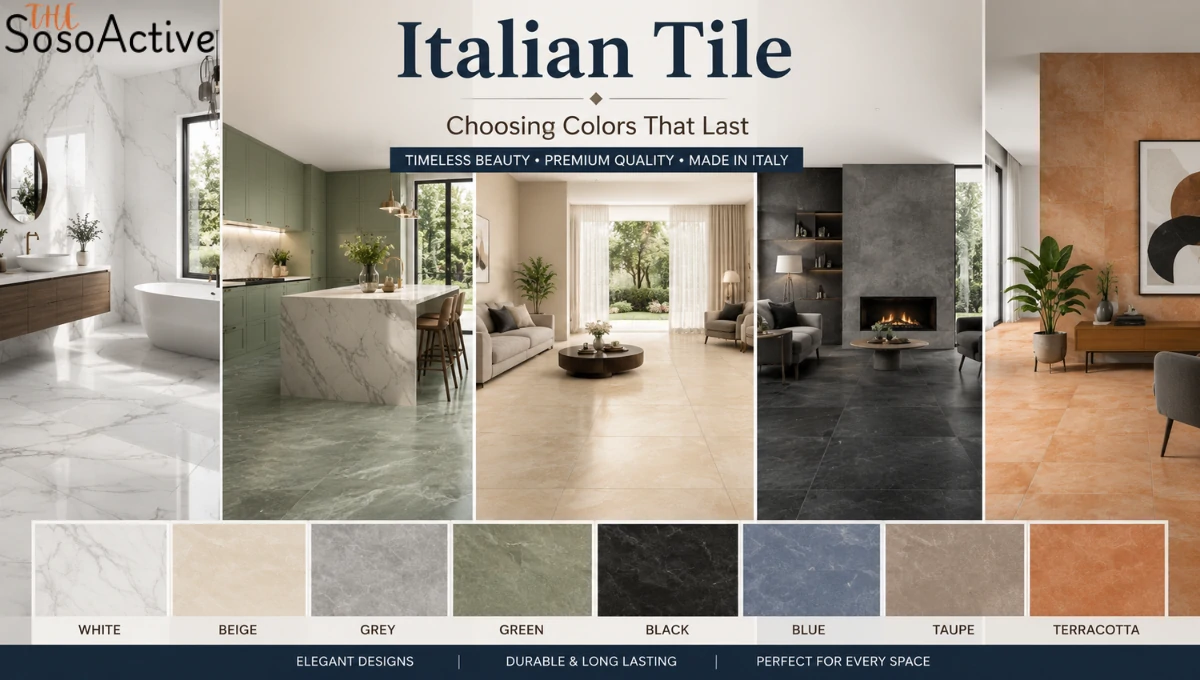
Trendy colors come and go, but flooring is a long-term investment.
Neutral colors are usually the safest choice.
Popular options include:
- White
- Cream
- Light gray
- Beige
- Soft stone tones
These colors work well with changing furniture styles and different paint colors over the years.
If you enjoy bright Mediterranean-inspired interiors, neutral Italian flooring pairs beautifully with the design ideas discussed in our guide on Santorini Style Flooring, where light flooring helps create open, relaxing spaces.
Common Mistakes to Avoid
Even premium tiles can disappoint if the wrong decisions are made.
Buying Based Only on Appearance
A glossy white tile may look beautiful in a showroom but become slippery in a bathroom.
Always think about where the tile will be installed.
Ignoring Installation Quality
Even the best Italian tile can look uneven if installed incorrectly.
Professional installation helps ensure proper leveling, grout spacing, and long-term performance.
Choosing the Cheapest Option
Lower prices can be tempting, but flooring is something most homeowners expect to keep for many years.
Higher-quality tiles often provide better durability and require fewer repairs over time.
How to Maintain Italian Tiles
One reason many homeowners choose Italian porcelain and ceramic tiles is their simple maintenance.
A basic routine includes:
- Sweep or vacuum regularly.
- Mop using warm water and a pH-neutral cleaner.
- Wipe spills promptly.
- Avoid abrasive scrubbing pads.
Natural marble, including Italian Carrara marble tiles, may require additional sealing depending on the specific product and finish.
Always follow the manufacturer’s care recommendations.
Are Italian Tiles Suitable for Every Home?
In most cases, yes.
Italian tiles are available in designs that suit many interior styles, including:
- Modern homes
- Contemporary interiors
- Farmhouse designs
- Mediterranean-inspired spaces
- Luxury apartments
- Commercial buildings
Whether you prefer stone, wood, marble, or concrete looks, there is usually an Italian tile design that complements your project.
Current Italian Tile Design Trends
While classic designs remain popular, several modern trends continue to grow.
Large Format Tiles
Large tiles create seamless-looking floors with fewer grout lines.
Marble-Look Porcelain
Many homeowners enjoy the appearance of marble without the maintenance requirements of natural stone.
Natural Stone Colors
Warm beige, ivory, and soft gray remain popular because they create bright interiors that work with many decorating styles.
Textured Finishes
Textured surfaces add depth and help improve slip resistance in certain areas.
Are Italian Tiles Worth the Cost?
Italian-made tiles often cost more than standard imported products.
However, many homeowners feel the investment is worthwhile because of:
- High manufacturing quality
- Elegant designs
- Long-lasting durability
- Strong resale appeal
For example, replacing flooring is a major project. Choosing quality materials from the beginning may reduce the need for replacement later.
The best option always depends on your budget, lifestyle, and renovation goals.
Frequently Asked Questions
1. What are Italian tiles?
Italian tiles are ceramic, porcelain, or natural stone tiles manufactured in Italy and known for their quality, durability, and stylish designs.
2. Why are Italian tiles so popular?
They are popular because of their premium craftsmanship, innovative manufacturing, elegant finishes, and long-lasting performance.
3. Are Italian tiles better than regular tiles?
Many Italian tiles are known for excellent quality and consistent manufacturing. However, the best choice depends on the product, budget, and intended use.
4. What are Italian Carrara marble tiles?
Italian Carrara marble tiles are natural marble tiles quarried in Italy. They feature a white background with soft gray veining and are widely used in luxury interiors.
5. Is Italian tile flooring suitable for kitchens?
Yes. Italian porcelain tiles are an excellent choice for kitchens because they are durable, moisture-resistant, and easy to maintain.
6. Can Italian tiles be used in bathrooms?
Absolutely. Many Italian ceramic and porcelain tiles are designed specifically for bathrooms and other moisture-prone areas.
7. Are Italian tiles difficult to clean?
No. Most porcelain and ceramic Italian tiles require only regular sweeping and damp mopping with a pH-neutral cleaner.
8. Do authentic Italian tiles cost more?
Generally, yes. Authentic Italian-made products often have higher prices because of manufacturing quality and design standards.
9. How long do Italian tiles last?
With proper installation and maintenance, quality Italian tiles can last for decades in residential settings.
10. How can I tell if tiles are made in Italy?
Check the product packaging, technical specifications, or manufacturer’s documentation. Authentic products are typically labeled with their country of origin.
Final Thoughts
Italian tiles have earned their reputation through decades of craftsmanship, innovative manufacturing, and timeless design. Whether you choose porcelain, ceramic, or luxurious Italian Carrara marble tiles, the right flooring can improve both the beauty and functionality of your home.
If you’re searching for tile flooring Italian solutions, focus on choosing materials that match your lifestyle instead of following short-term trends. A well-selected floor can remain attractive for many years with proper installation and regular maintenance.
For more flooring inspiration, home improvement ideas, and practical renovation guides, continue exploring The SosoActive.